
• Sailing Fundamentals

    Our beginner level courses are designed to insure you get off to a smooth start. First, you will be placed aboard with other students of similar skill and experience levels. Learn more

  • US Sailing Certification System

    Learning to sail is part dream, part great instruction, and part hands-on experience.

    All of these come together in the US Sailing Basic Keelboat Certification System. This Learn to Sail program guides you through seven levels of courses where you will accumulate skills and experience with each certification. Check them out here! Learn more

  • Performance Sailing

    Our intermediate level courses are designed for sailors familiar with the basics who are looking to expand their skills and confidence and move into either cruising or racing. Check out our offerings here! Learn more

Nav1 Essential Marine Navigation

NEW Course!!
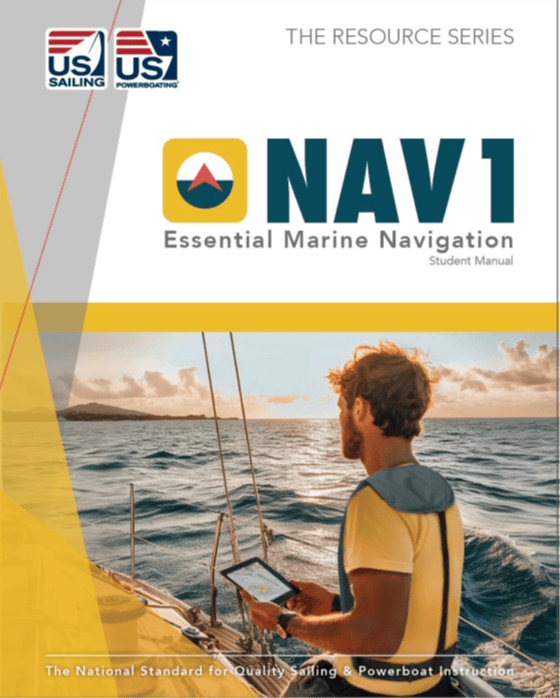
NAV1 Essential Marine Navigation is a US Sailing course that offers instruction on using electronic navigation techniques for safe, reliable navigation in the marine environment. This course provides a US Sailing certification upon passing a written and practical test at the end of the course. This course will be conducted in a classroom environment with hands-on training using electronic smart phones and tablets using the Garmin Navionics marine Boating APP software.  The only prerequisite is each student must have either an Apple or Android smart phone or tablet with a GPS chip with the Garmin Navionics Boating APP software already installed on their device.

This two-day course runs from 8:00am to 4:00pm Saturday and Sunday.

Check the J World website calendar for dates when this course if being offered.

Price:  $545 per person

How do I register?
Call 410-280-2040 or email admin@jportinc.com for more information

Classroom Presentations Include:

The Context of Modern Navigation
     What is Navigation?
     Ongoing Evolution of Electronic Navigation
     Essential Marine Navigation
Navigation Concepts
     Position, Direction, Distance, Speed
     Chart Features & Symbols
Using Electronic Navigation Systems
     Electronic Navigation Systems (ENS)
     Types of Electronic Navigation Devices: Installed Devices
     Types of Electronic Navigation Devices: Portable & Mobile Devices
     Electronic Charts
     Chart Display Customization
     Customization of Electronic Navigation Systems
     Basic Functions
     Building a Route
     Steering to a Waypoint
     Sailing-Specific Navigation Information
     Additional Resources
     Using an Autopilot
Aids to avigation (ATON)
     IALA Systems A & B
     Types of Aids to Navigation
     AIS Aids to Navigation (AIS ATON)
     Western River System
     Intercoastal Waterway System (ICW)
Tides and Currents
     Tides
     Chart (Sounding) Datum
     Determining Tide Height
     Depth Sounders
     Safe Passage over Shallow Waters
     Chart (Height) Datum
     Safe Passage under Overhead Obstructions
     Currents
     Current Considerations
Eyeball Piloting
     Piloting Concepts
     Use of Ranges
     Pilotage Using Color of the Water
Independent Navigation Systems
     Purpose & Considerations
Trip Planning
     Resources
     Planning Considerations
     Navigation Considerations
Navionics Boating APP
     Home Screen
     Basic Settings and Functions
     Building a Route
     Following a Route and Creating a Track
     Exporting and Importing a Route

In Case Your Missed It – We’ve added another date for our Coastal Navigation certification!

piloting

Check our Calendar for dates when this course will be available:

Due to its popularity, we’ve added an additional course date for the Coastal Navigation Two-Day Seminar & Certification   This is a two-day, comprehensive and challenging classroom course on coastal navigation and piloting. Our curriculum covers charts and features, compass errors, plotting, triangulation, dead reckoning, route planning, tides, current vectors, aids to navigation and an introduction to electronic navigation. The course text is US Sailing’s Coastal Navigation book. This is an ideal course for anyone who wants to develop a solid foundation in navigation principles. This course includes US Sailing certification upon completion of Coastal Navigation written exam.

Thursday Night Racing – Rules Part One

J World’ s Thursday Night Racing – Sponsored by Quantum Sails is governed by the Racing Rules of Sailing.  The purpose of the racing rules is to ensure safe and fair racing.  The value is that we all play by the same rules, which makes racing more fun.

The Racing Rules of Sailing

Every four years the racing rules are refreshed – and the new rules for 2017-2020 will be in force this season.  The rule book is made available both by World Sailing and US Sailing.  If you are a US Sailing member you can request one for free or download a free app.  You can also go to World Sailing’s site and download the rules and more.

Other Important Rules

There are other important rule considerations too.  There are several documents that contain rules everyone must follow.  The first is the Notice Of Race.  The Notice of Race (NOR) has information that sailors need to plan for a regatta.  You can find the Thursday Night Racing NOR at the online notice board.  The Sailing Instructions (SI’s) are written directions that describe how a regatta will be conducted.  You can find the Thursday Night Racing SI’s at the online notice board.  Finally, the class rules govern each individual class.  While on Thursday’s we don’t inspect boats for class rules compliance we hope that you sail within the spirit of your class rules.  Thursday’s are an opportunity to practice at a high level so practice like you are going to play.

Rule Compliance and Enforcement

Sailing is a self policing sport.  The rules are enforced by the sailor’s themselves.  One of the most important rules is that when you break a rule you take a penalty.  You don’t need a referee or even a fellow competitor to tell you that you broke a rule; nor do they need to tell you that you broke a rule in order to take a penalty.  It is important to remember that by participating in a race, each competitor agrees to be governed by rules.

Fair Sailing, Good Manners, Sportsmanship

Racing sailor must compete in accordance with recognized principles of fair play.  They must not commit any conduct that is a breach of ood manners, a breach of good seamanship or unethical.

Sailing Green

Sailors are encouraged to minimize their impact on the environment.  There is a specific rule that prohibits putting trash in the water.  Trash is anything you would throw away at home – including food items (e.g. apple cores.)


Skip to toolbar